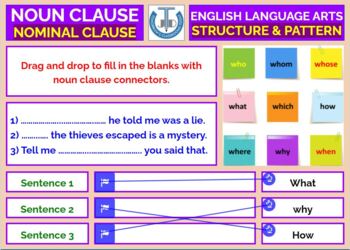
What Is Noun Clause - Noun Clause Examples And Uses Between The Lines By English Forward - The relative pronouns are who, which, what, that (= who or which), as (after such or same) and the compound relatives whoever, whichever, whatever.. It can be the subject of a sentence, an object, or a complement. For example, if the sentence asks do you know what time we are leaving? the noun clause is what time we are leaving? you can't easily substitute a noun here. So, what must luke unlearn? Noun clauses are subordinate clauses or dependent clauses that perform eight grammatical functions. In this lesson, we'll look at the dependent clause and its.
A noun clause can act as subjects, objects (direct objects and indirect objects), predicate nominatives, complements, or objects. Remember that a noun names a person, place, thing, or idea. A noun clause is a subordinate clause in a complex sentence that acts as a noun. It is a direct object in this sentence. It must always be paired with an independent (main) clause.
Noun Clauses Lesson And Resources 6 Sessions By John Dsouza Tpt from ecdn.teacherspayteachers.com Remember, because a noun clause is a clause, you should be able to find both a subject and a verb. It follows a linking or copular verb to describe or modify the subject of the sentence. I have a surprise for whoever wins the race. The verb in a clause can be finite use this pan for the pasta. Whether he will attend or not. A noun clause cannot stand alone because it is not a complete thought. A noun clause is a dependent clause that acts as a noun. Noun clauses can also be an object of a noun clause:
= subject complement of 'uncertainty' describing what is uncertain.
For example (noun clauses shaded) (this noun clause is the direct object of ask.) he knows all about art, but he doesn't know what he likes. A noun clause (also called nominal clause ) is a dependent clause that plays the role of a noun. A noun clause can act as subjects, objects (direct objects and indirect objects), predicate nominatives, complements, or objects. The relative pronouns are who, which, what, that (= who or which), as (after such or same) and the compound relatives whoever, whichever, whatever. Noun clauses can function as subjects, objects, or complements. It follows a linking or copular verb to describe or modify the subject of the sentence. A noun clause is a dependent clause that acts as a noun. We studied that depend or subordinate clauses are subdivided into three parts: A noun is the name of a person, place, thing, or idea. Noun clauses are clauses that function as nouns. It must always be paired with an independent (main) clause. A noun clause usually begins with the following words: English easy learning grammarsentences and clausesa clause is a group of words which contains a verb.
Noun clauses can act as direct objects, subjects , indirect. As a noun clause does the work of a noun, it can be subject to a sentence, object of a transitive verb, object of a preposition, apposition to a noun, or complement to a linking verb. It can be the subject or object of a verb. I'm elizabeth o'brien, and my goal is to get you jazzed about grammar. A noun clause usually begins with the following words:
How To Identify A Noun Clause 11 Steps With Pictures Wikihow from www.wikihow.com As a noun clause does the work of a noun, it can be subject to a sentence, object of a transitive verb, object of a preposition, apposition to a noun, or complement to a linking verb. What is a noun clause? A noun clause is that contains a finite verb and functioning like a noun within a sentences. Question words like what, how, when etc., can also be used to introduce noun clauses. Remember that a noun names a person, place, thing, or idea. A noun clause (also called nominal clause ) is a dependent clause that plays the role of a noun. I have a surprise for whoever wins the race. Noun clauses begin with words such as how, that, what, whatever, when, where, whether, which, whichever, who, whoever, whom, whomever , and why.
The examples below show how they are used noun clauses often use words such as when, what, why, who and other question words, but the speaker may or may not be making a question. Noun clauses come after the words such as how, that, what, whatever, when, where, whether, which, whichever, who, whoever, whom, whomever, and why. A clause is a group of words containing a subject and a verb. Noun clauses can function as subjects, objects, or complements. Noun clauses are clauses that function as nouns. We already have talked about independent and dependent clauses. It is a direct object in this sentence. What he said = object what he bought was awful: For example, if the sentence asks do you know what time we are leaving? the noun clause is what time we are leaving? you can't easily substitute a noun here. English easy learning grammarsentences and clausesa clause is a group of words which contains a verb. What is a noun clause? It can be the subject of a sentence, an object, or a complement. It follows a linking or copular verb to describe or modify the subject of the sentence.
What is a noun clause? Noun clauses can play the role of. …what you have learned. this clause is a noun clause. It can be used as the subject, direct object, indirect object, object of a preposition, subject complement, or appositive. Question words like what, how, when etc., can also be used to introduce noun clauses.
Resultado De Imagen Para Noun Clauses Aprender Ingles Escuela Y Idiomas from i.pinimg.com What is noun clause, example sentences It begins with words such as how, that, what, whatever, when, where, whether, which, whichever, who, whoever, whom, whomever. As a noun clause does the work of a noun, it can be subject to a sentence, object of a transitive verb, object of a preposition, apposition to a noun, or complement to a linking verb. A clause that fulfils the same function as a noun | meaning, pronunciation, translations and examples. A noun clause is a clause (containing a subject and a verb) that can replace a noun. What is a noun clause? Noun clauses can act as direct objects, subjects , indirect. Noun clauses are usually introduced by the subordinating conjunctions that, if and whether.
A noun clause is a dependent clause that functions as a noun.
I have a surprise for whoever wins the race. A noun clause can function as what you have done pleased so many fans. A noun clause refers to a clause that serves the same purpose as a noun and is usually dependent. A noun clause functions as a noun in a sentence. The examples below show how they are used noun clauses often use words such as when, what, why, who and other question words, but the speaker may or may not be making a question. A noun clause is a dependent clause that acts as a noun. Just like nouns do, a noun clause names people, things noun clauses have words like; What is a noun clause? It works as a noun in a sentence. As a noun clause does the work of a noun, it can be subject to a sentence, object of a transitive verb, object of a preposition, apposition to a noun, or complement to a linking verb. What is noun clause, example sentences Remember that a noun names a person, place, thing, or idea. We studied that depend or subordinate clauses are subdivided into three parts:
What Is Noun Clause - Noun Clause Examples And Uses Between The Lines By English Forward - The relative pronouns are who, which, what, that (= who or which), as (after such or same) and the compound relatives whoever, whichever, whatever.. There are any What Is Noun Clause - Noun Clause Examples And Uses Between The Lines By English Forward - The relative pronouns are who, which, what, that (= who or which), as (after such or same) and the compound relatives whoever, whichever, whatever. in here.